
This is the most exciting and visually accessible difference between the two models. The ceramic bezel (officially Cerachrom) insert is certainly interesting as a material. It is for most purposes scratch-proof unlike the 16610 aluminum inserts. Rolex 116610 Assembly ROLEX 116610 ASSEMBLY I say ‘for most purposes’ because if you hit it hard enough against the right material, you probably could scratch ceramic, but you’d be more likely to shatter it.
Now, if you did shatter it, it would likely be very expensive to replace compared with the aluminum bezel insert which can be replaced for about $200. I have yet to see or hear of a broken ceramic bezel, but we have seen a considerable number of aluminum inserts that have needed to be replaced within a few years, so I think the ceramic is a true advantage for most owners.
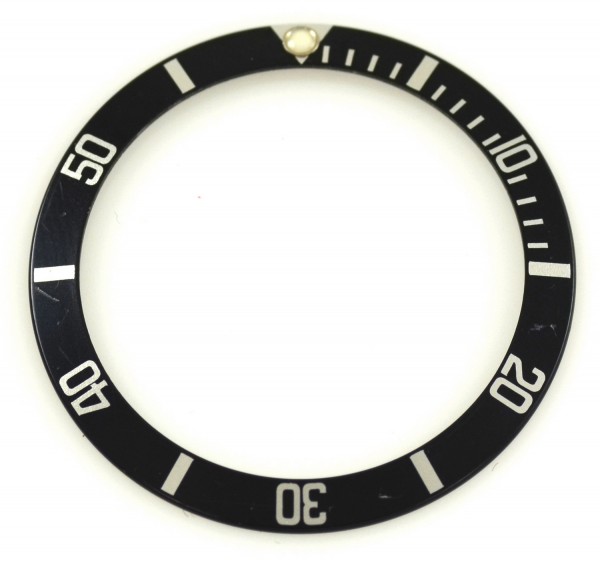
What I do not see pointed out frequently is the improvement in the actual mechanism of the bezel.
In the 16610, a single click-spring controlled the bezel’s rotation and it could become stuck or rotate freely. It was also difficult to seat the bezel accurately, the bezel might be a frustrating half tick off of true centered after being replaced during service.
The 116610 uses four click-springs set into the case. This results in a perfect alignment of the bezel markers and a consistently smooth and solid turn.
LUME
The next most noticeable feature is the luminous which has an obvious size difference (so-called Maxi dial) and a less obvious color difference in that it glows bluish-green in the dark instead of green.
Rolex terms the blue luminous as “Chromalight”, although we suspect that it is the same SuperLuminova material that Rolex has been using for years, just with an alternate color. The particular color of blue-green is one that the dark adjusted eye is most sensitive to. So whether or not it is objectively brighter, your eyes are more sensitive to that wavelength and you will perceive it as brighter.

BRACELET AND BUCKLE
The links of the new Submariner date are entirely solid. This is difficult to see without removing a link, so we’ve done that in the photo below.

This gives the overall bracelet a little extra weight but likely removes the issue of bracelet stretch that has been all too common on Rolex bracelets prior to this.
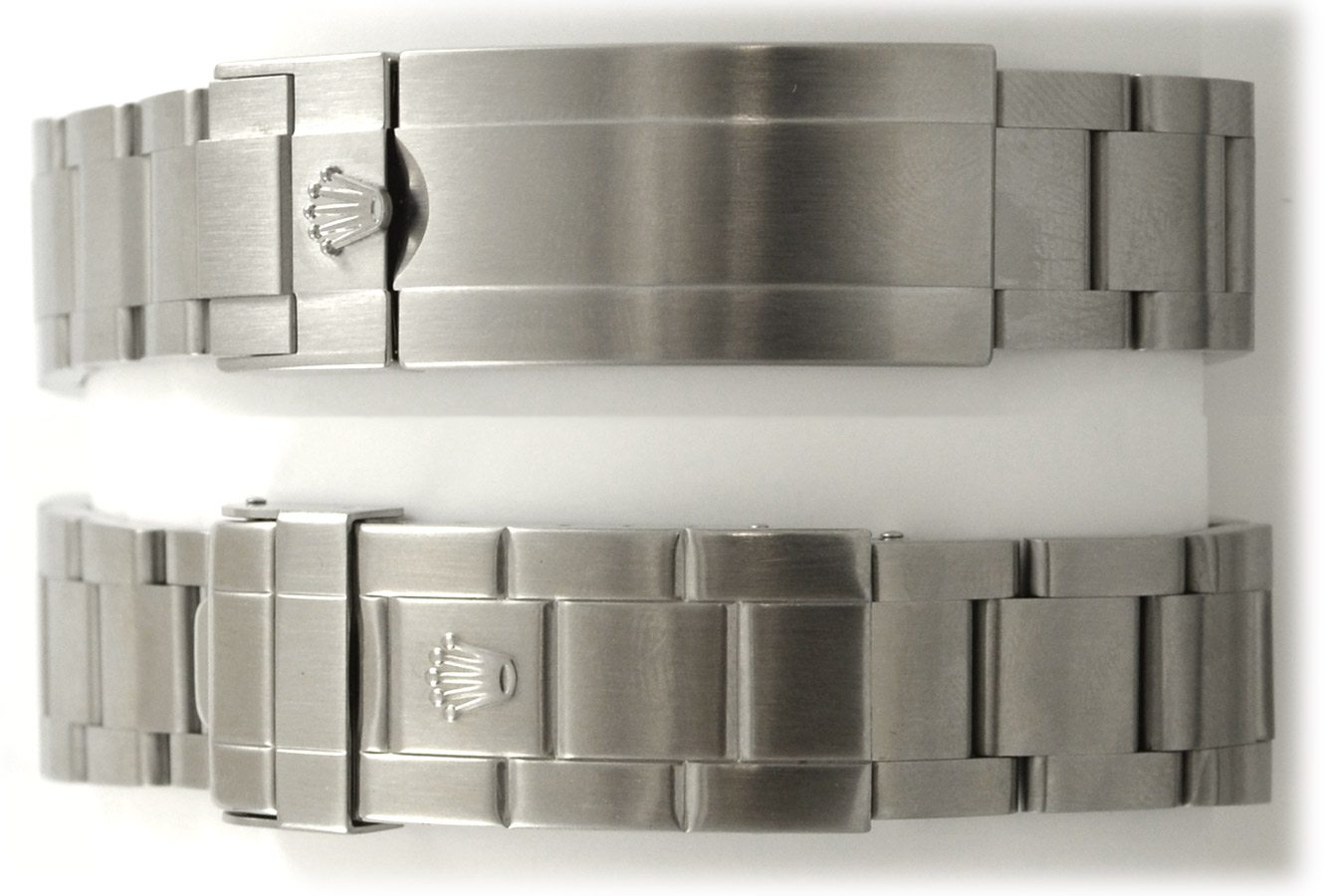
The Glidelock clasp is a truly noticeable and great improvement. Not only does it give a greater degree of precision when micro-adjusting for fit, it also makes it easier for owners (as opposed to jewelers) to perform the task of adjusting the bracelet themselves. If you live somewhere hot like we do, you’ll notice your wrist swells in the summer, so an easy micro-adjustment is a godsend.
Another good reference for this watch may be followed at
